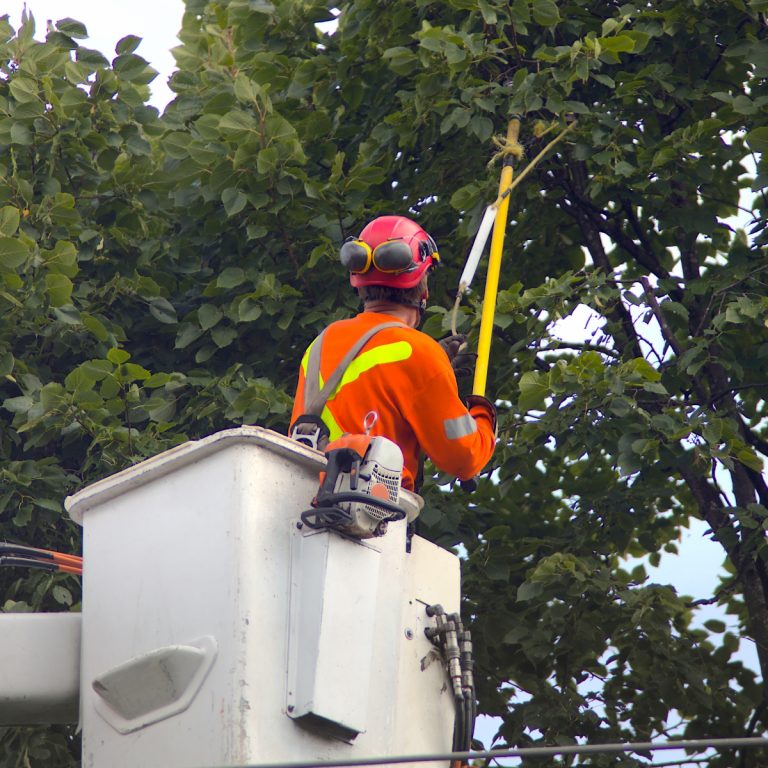
For most trees in Massachusetts, the best time to prune is late winter, from about January to early March, while the tree is dormant. Without leaves, it is easy to see the branch structure, the cuts close quickly once spring growth starts, and many insects and diseases are not active. Dead, broken or hanging branches can be removed any time of year.
There are a few important exceptions, though, especially for oaks, maples and trees that flower in spring. Here is a simple guide for the trees you are most likely to have in your yard.
Late winter: the best time for most trees
Dormant pruning works well for most shade trees, like lindens, honey locusts, ashes and elms, as well as for oaks. The ground is often frozen, so trucks and equipment do less damage to your lawn, and the crew can see every branch.
- The branch structure is easy to see without leaves.
- Fresh cuts start to close as soon as the tree wakes up in spring.
- Many insects and diseases are not active.
- Frozen ground protects your lawn and garden.
Oaks: avoid spring and early summer
Oaks are best pruned while they are dormant. Oak wilt, a serious disease of oaks, spreads in neighboring states and is carried by small beetles that are drawn to fresh wounds. To be safe, arborists avoid pruning oaks from about April through July. If an oak is damaged in a storm during that time, the broken limbs should still be cleaned up, but the timing matters for routine work.
Maples and birches: they may “bleed”
Maples, birches and a few others drip a lot of sap when they are pruned in late winter and early spring. It looks alarming, but it does not usually hurt the tree. If the dripping bothers you, these trees can be pruned in early summer after the leaves have fully opened.
Spring-flowering trees: prune right after they bloom
Trees like crabapples, cherries, dogwoods and magnolias set their flower buds the year before. If you prune them in winter, you cut off this spring’s flowers. For the best show, prune them soon after the flowers fade.
Dave’s tip
Tell us which trees you have when you call. We schedule each one for the time of year that is best for it.
Times to avoid
- Spring, while leaves are coming out: the tree has used up stored energy and the bark tears more easily.
- Late summer and fall for heavy pruning: cuts close slowly as the tree gets ready for winter, and fungi are spreading spores.
- During a drought: a stressed tree handles pruning poorly. Wait for rain, or water first.
Anytime: safety pruning
Dead limbs, cracked branches and anything hanging over the house or driveway should come out as soon as you see them, no matter the season. Waiting for the “right” time is never worth the risk. For trees touching power lines, call the utility company first.
How much to prune
A healthy mature tree should not lose too much of its leaves at one time. Good pruning removes the right branches, not the most branches. And never let anyone “top” your tree. Read why tree topping hurts trees to see what to ask for instead.
Frequently Asked Questions
Can I prune trees in the fall?
Light pruning and removing dead wood are fine in the fall. Heavier pruning is better left for late winter, when the tree is fully dormant.
Is it bad to prune a maple that is dripping sap?
Usually not. Sap flow after late-winter pruning does not normally harm a healthy maple. If you prefer to avoid it, prune in early summer instead.
How often should trees be pruned?
Young trees benefit from light pruning every few years to build good structure. Mature trees are usually pruned every 3 to 5 years, or when an arborist finds dead or weak limbs.
When should I prune an oak tree in Massachusetts?
Prune oaks in the dormant season, late fall to early spring, and avoid April through July unless a limb is broken or dangerous.
Ready to get your trees on a schedule? Request a free estimate or learn more about our expert pruning.