A tree may be dying if it has large dead branches, bark falling off, mushrooms growing at the base, deep cracks in the trunk, or leaves that turn color weeks before other trees. One sign on its own does not always mean the end. Several signs together mean it is time to have an arborist look at it.
Trees can’t tell you when something is wrong, but they do show it. The sooner you catch a problem, the better the chance the tree can be saved. Here is what Dave and our crew look for when we visit a tree.
8 signs your tree is in trouble
1. Dead or dying branches
A few small dead twigs are normal. Large dead limbs, or dead branches at the top of the tree, are not. Dead wood is brittle and can fall without warning, so it should come out even if the rest of the tree is healthy.
2. A thin crown
Look at the top of the tree in summer and compare it to the trees around it. If you can see a lot more sky through it than you used to, the tree may be stressed by root problems, drought, insects or disease.
3. Leaves that change color too early
When one tree turns red or yellow in August while the rest are still green, it is often a sign of stress. Small, pale or curled leaves in early summer can point to the same thing.
4. Bark that is peeling, cracked or missing
Some trees, like birches and sycamores, shed bark normally. On most other trees, loose bark, bare patches or long vertical cracks can mean the wood underneath is dying.
5. Mushrooms or fungus at the base
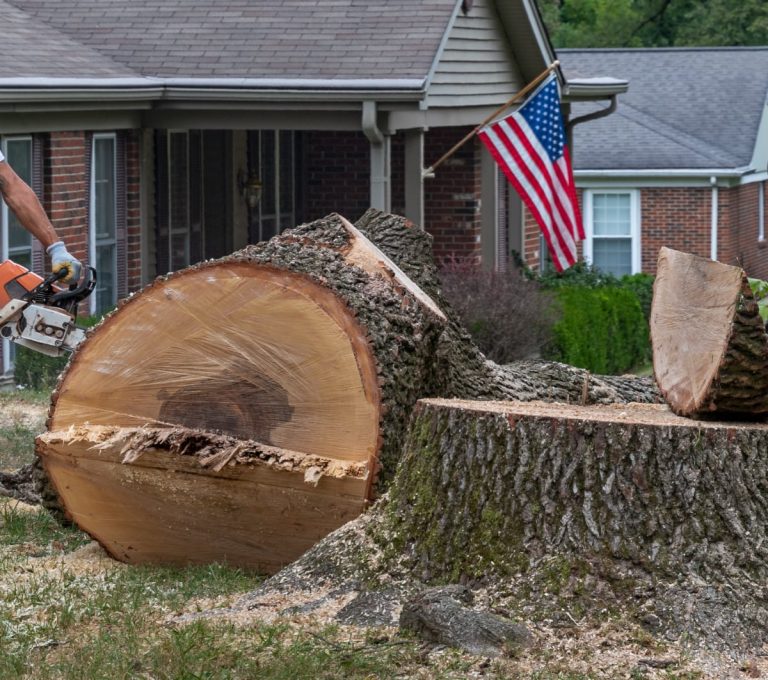
Mushrooms, shelf-like conks or soft, crumbly wood near the base or on the roots often mean decay inside the tree. Root and trunk decay can leave a tree looking fine on the outside while it gets weaker every year.
6. A new lean or lifting soil
Many trees grow with a lean and are perfectly stable. What matters is a change. If a tree has started leaning, or the soil on one side is cracked or lifting, the roots may be failing. Call right away.
7. Holes, sawdust or sap
Small holes in the bark, piles of sawdust at the base, or sap running down the trunk can be signs of insects. Some insects only attack trees that are already weak, so they are often a symptom of a bigger problem.
8. Sprouts from the trunk or roots
A burst of small shoots growing from the base or along the trunk is often a stressed tree trying to survive. It is a sign to look closer at the roots and the top of the tree.
Dave’s tip
Take a photo of your tree from the same spot every summer. When you compare them side by side, slow changes in the crown are much easier to see.
Common causes of a declining tree
- Root damage from digging, new driveways, patios or construction.
- Soil packed down by cars or heavy equipment.
- Too much mulch piled against the trunk. Mulch should be 2 to 4 inches deep and kept a few inches away from the bark.
- Drought, especially for young trees and trees near pavement.
- Poor pruning, like topping, that leaves large wounds.
- Insects and diseases.
Can a sick tree be saved?
Often, yes, if the problem is caught early. Removing dead wood, correcting mulch, watering during dry spells and proper pruning can bring many trees back. A split or weak fork can sometimes be supported with cabling and bracing.
If a tree has serious decay in the trunk or roots, or it could fall on a house, removal may be the safest choice. Our crews can take down even very large trees near homes, using our own crane when needed.
When to call an arborist
- A large limb is dead or hanging.
- The tree has started to lean or the soil is lifting.
- You see mushrooms, conks or soft wood at the base.
- The tree is close to your house, driveway or power lines and shows any of the signs above.
For trees touching power lines, call the utility company first. Never try to prune near a live wire yourself.
Frequently Asked Questions
How can I tell if a tree is dead or just dormant?
In spring, scratch a small twig with your fingernail. Green, moist wood underneath means it is alive. Brown, dry wood means that branch is dead. Check twigs from several parts of the tree.
Can a tree die from the inside?
Yes. Decay can hollow out the trunk or roots while the leaves still look healthy. An arborist can check for decay and tell you whether the tree is still safe.
Is a leaning tree dangerous?
A tree that has always leaned is often stable. A tree that starts leaning suddenly, especially after a storm or with cracked soil at the base, can be dangerous and should be looked at right away.
Not sure what is going on with your tree? Ask for a free estimate and we will come take a look with you.